South Sudan Rejects UN Warning Over Risks Surrounding December 2026 Elections
Posted on
September 12, 2026 • 05:35 PM
JUBA, South Sudan — September 12, 2026
The South Sudan government has rejected concerns raised by United Nations human rights investigators that the country's planned December 2026 elections could contribute to renewed political confrontation and armed violence if key safeguards are not put in place.
South Sudan's Ministry of Foreign Affairs said the government “strongly rejects” the allegations and remains committed to implementing the 2018 Revitalized Peace Agreement and moving the country toward elections.
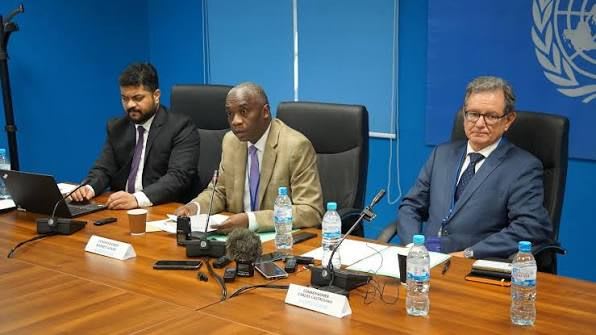
The government response followed the conclusion of a four-day visit by the UN Commission on Human Rights in South Sudan. The Commission said renewed violence, political tensions, shrinking civic space, corruption and continued impunity are putting civilians and South Sudan's political transition at risk.
Commissioner Barney Afako said the UN body's concern is not about whether South Sudanese people should vote, but about the conditions under which the elections are held. The Commission said peaceful and credible elections require political and civic freedoms, civilian protection, an adequately supported electoral system and credible ways of resolving election disputes.
The Commission also called for broader political dialogue involving political opponents, including the SPLM-IO and supporters of detained First Vice President Riek Machar, as well as civil society, women and young people.
The South Sudanese government disputed the UN assessment, saying the country's political future should be determined through nationally owned processes. The Foreign Ministry pointed to the government's planned inter-party dialogue as a forum where political stakeholders can discuss issues affecting the country's transition.
The disagreement comes at a critical stage in preparations for the South Sudan elections scheduled for December 22, 2026, expected to be the country's first national elections since independence in 2011.
The UN Commission has stressed that its warning is about risks rather than a prediction that violence will inevitably occur. Its position is that elections should proceed with safeguards that allow South Sudanese citizens to participate freely and peacefully.
For the government, the challenge in the months ahead will be demonstrating that election preparations, political dialogue and security arrangements can provide conditions for a credible and peaceful vote.